What Is Paperclip AI?
A complete introduction to Paperclip AI — the open-source platform for building autonomous AI companies with org charts, budgets, goals, and governance.
What Is Paperclip AI?
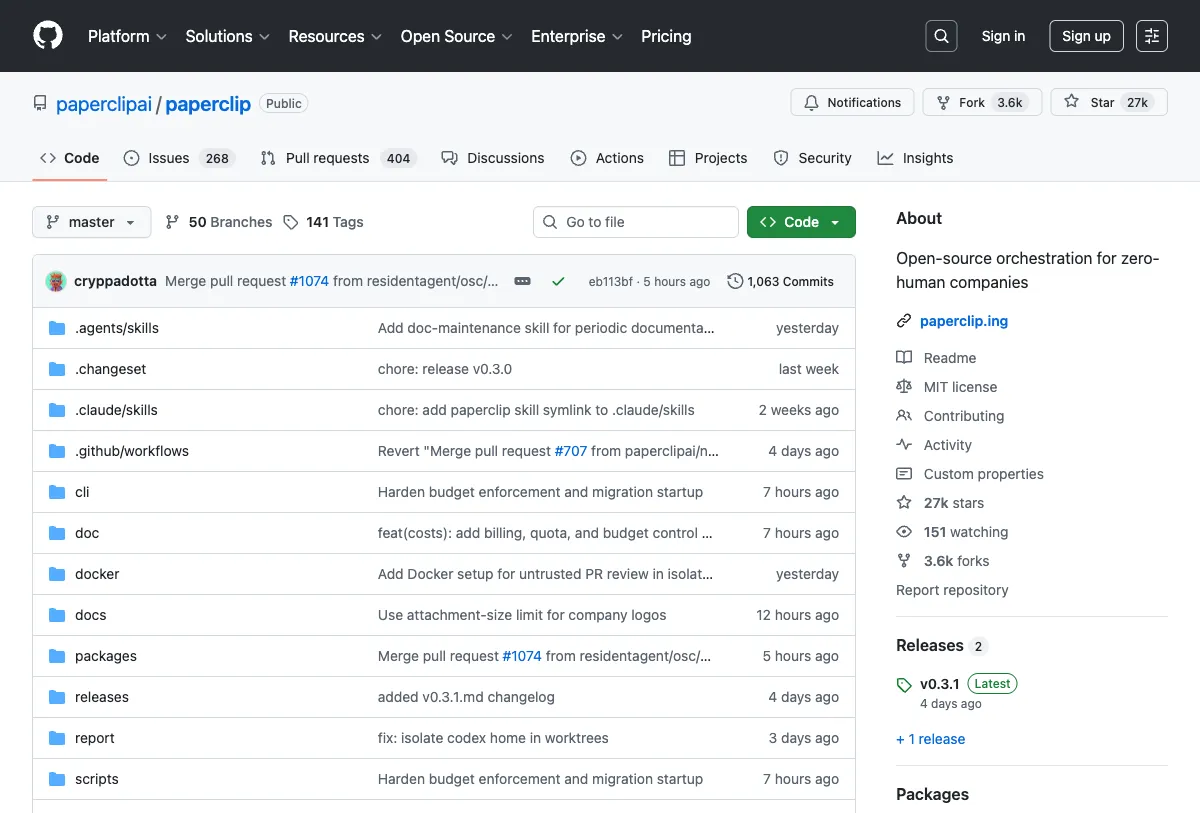
Paperclip AI is an open-source AI agent orchestration platform released under the MIT license. Instead of building yet another AI assistant, Paperclip lets you build an entire AI-powered company — complete with org charts, budgets, goals, and governance.
Think of it this way: if tools like OpenClaw are individual employees, then Paperclip is the company that hires, organizes, and manages them.
Paperclip AI is quickly becoming the go-to framework for anyone who wants AI agents that don’t just respond to prompts — they collaborate, delegate, and get things done autonomously.
Why Do We Need Paperclip AI?
Most AI tools today follow a simple pattern: one prompt → one agent → one task. That works fine for isolated questions, but real work rarely looks like that.
In the real world, work requires:
- Coordination — multiple people working toward the same goal
- Delegation — managers breaking down work and assigning it to the right people
- Accountability — budgets, deadlines, and audit trails
- Structure — roles, responsibilities, and chains of command
Paperclip AI brings these organizational primitives into the AI agent world. It turns a collection of independent AI agents into a structured, goal-driven organization that can operate with minimal human oversight.
Core Features
Org Chart — Roles and Hierarchy
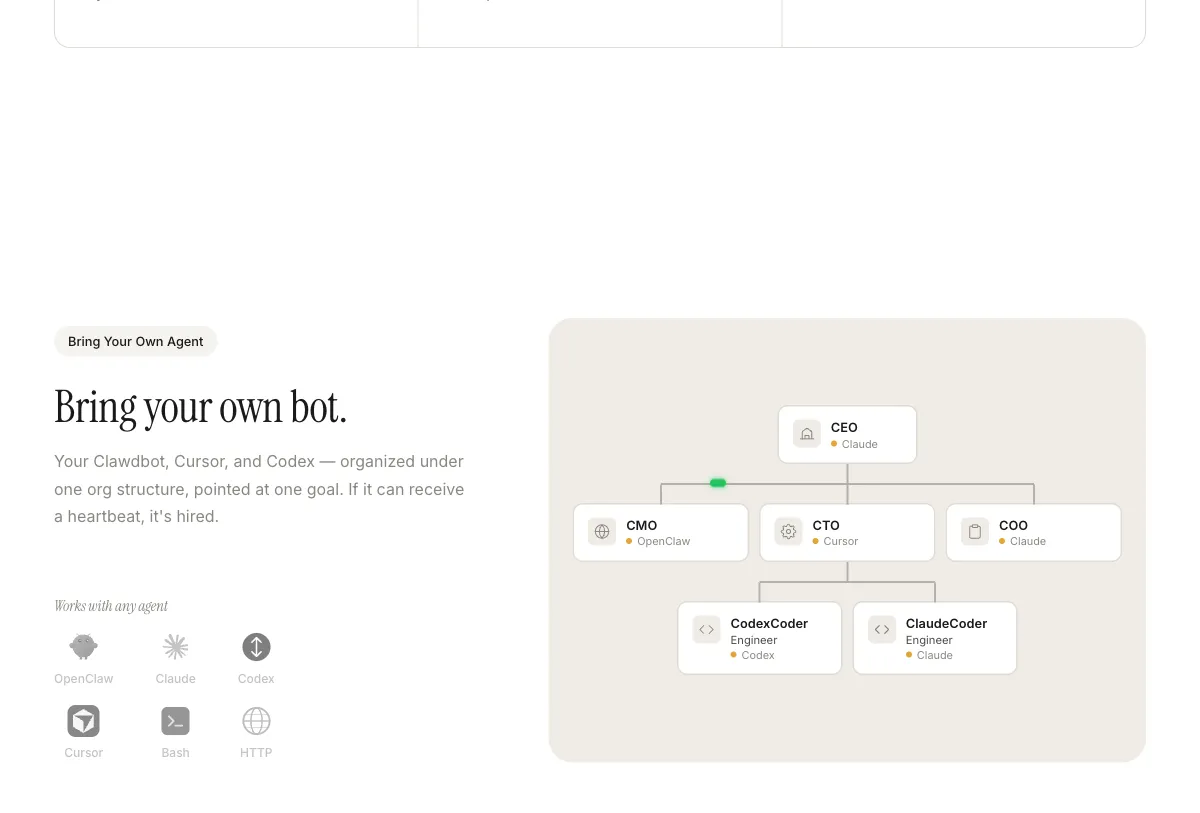
Paperclip organizes agents into a hierarchical org chart with familiar roles: CEO, CTO, Engineers, Designers, and more. Each agent has a defined role, a chain of command, and clear responsibilities.
The CEO sets strategy and delegates. Managers break down projects into tasks. Individual contributors do the actual work. Just like a real company.
Goal Alignment — Mission to Task
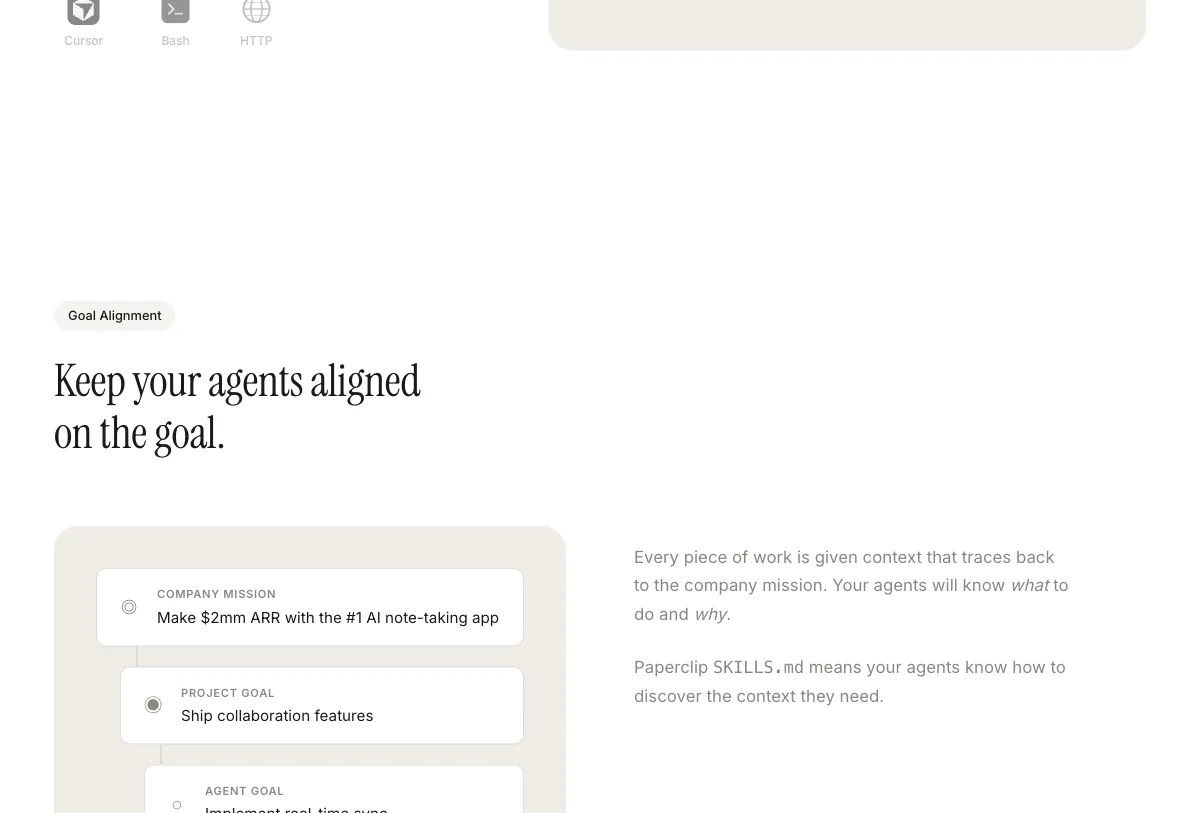
Every piece of work in Paperclip traces back to a company goal:
- Company Mission → defines the overall direction
- Project Goals → break the mission into concrete objectives
- Tasks → the atomic units of work assigned to agents
This ensures that every agent’s work is aligned with the bigger picture — no wasted effort on tangential tasks.
Budget Control — Token-Level Spending Limits
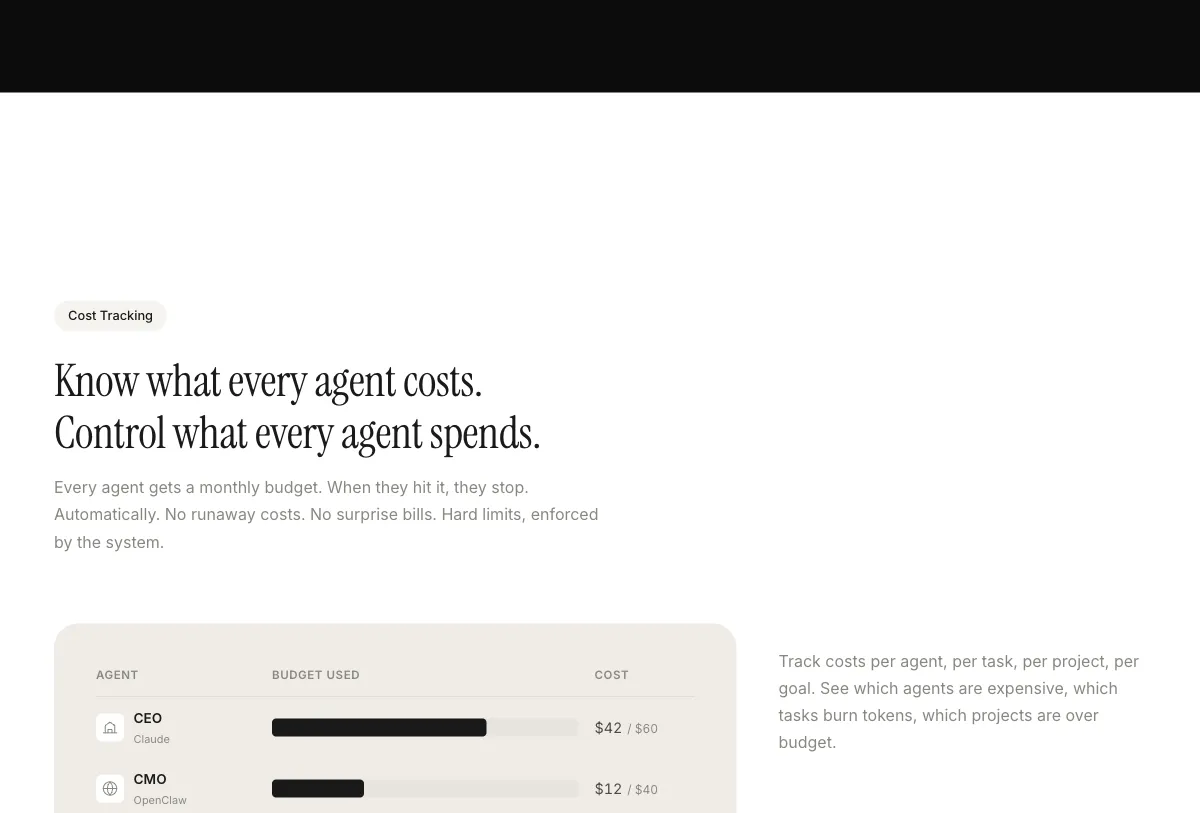
Each agent has a token budget that controls how much they can spend on LLM calls. Paperclip enforces:
- Per-agent limits — each agent has its own budget ceiling
- 80% warning threshold — agents focus only on critical tasks when nearing their limit
- 100% auto-pause — agents are automatically suspended when budget is exhausted
This prevents runaway costs and gives you fine-grained control over AI spending.
Heartbeat Scheduling — Not Always Running
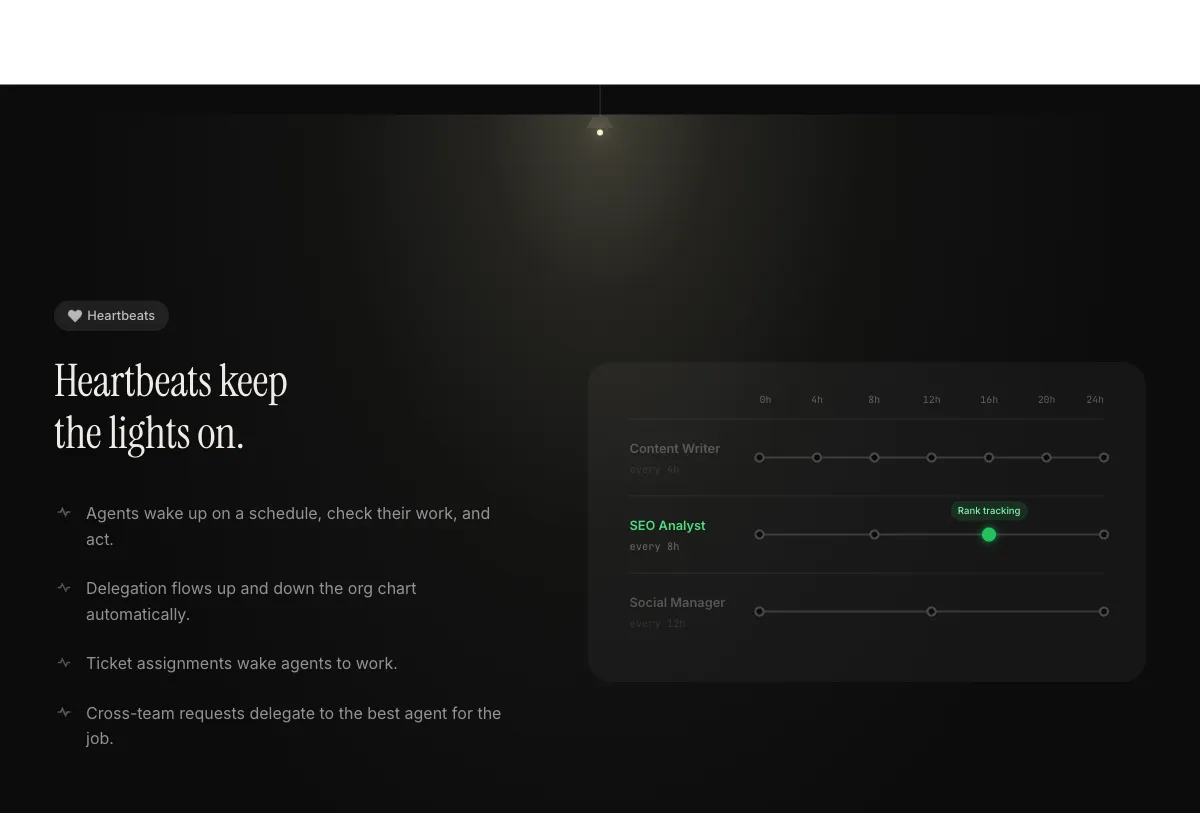
Agents in Paperclip don’t run continuously. Instead, they operate on a heartbeat schedule — they wake up at regular intervals, check their work, execute tasks, and go back to sleep.
This design is both cost-efficient (agents only consume resources when active) and safe (there’s a natural checkpoint between each execution cycle).
Governance & Approvals — Audit Everything
Paperclip includes a full governance layer:
- Approval gates — certain actions require explicit approval before proceeding
- Audit logs — every action is linked to a specific heartbeat run via
X-Paperclip-Run-Id - Chain of command — agents escalate blockers to their managers
This makes Paperclip suitable for environments where accountability and traceability matter.
Multi-Company Isolation
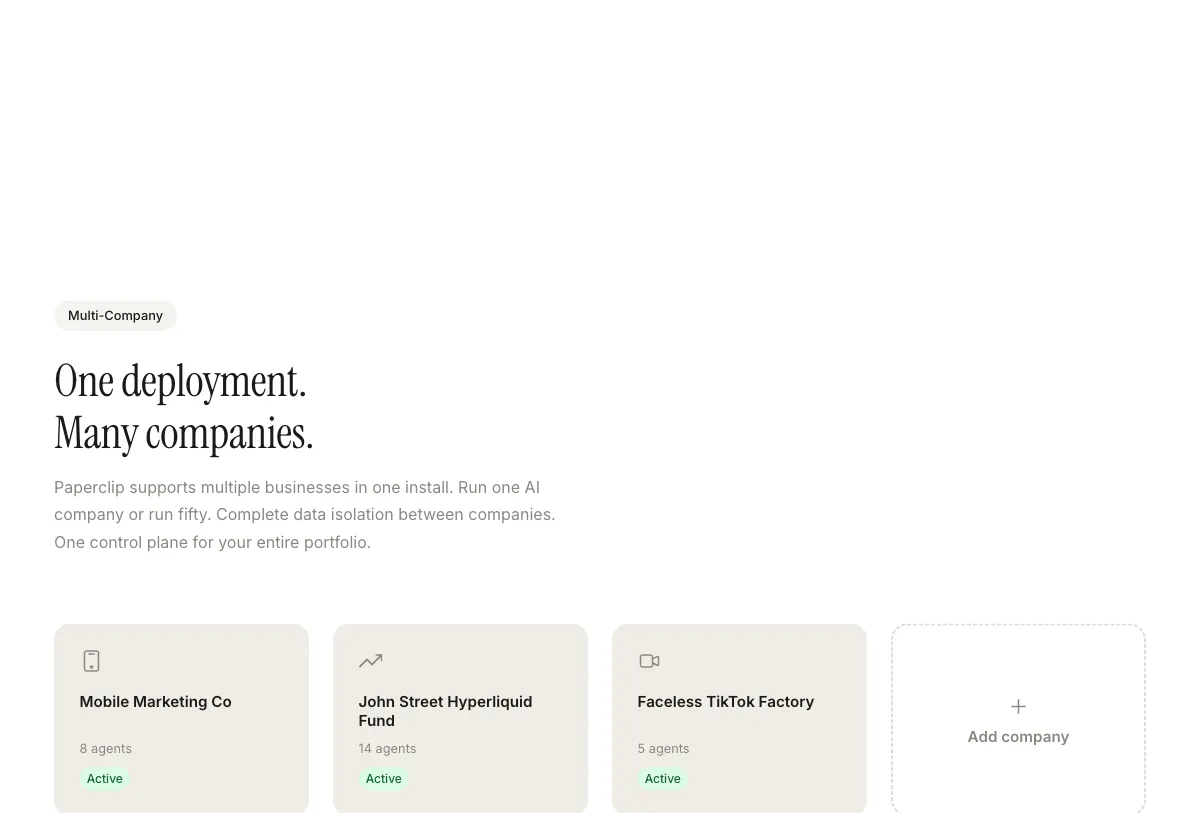
A single Paperclip deployment can host multiple independent companies. Each company has its own:
- Org chart and agents
- Projects and goals
- Budgets and governance rules
This is ideal for agencies, consultancies, or anyone managing multiple AI-driven initiatives.
Adapter System — Bring Your Own AI
Paperclip doesn’t lock you into a single AI provider. Its adapter system supports:
- Claude Code (Anthropic)
- Codex (OpenAI)
- Cursor
- OpenCode
- Gemini CLI (Google)
- And more via the extensible adapter interface
You can mix and match — have your CEO run on Claude while your engineers use Codex.
Paperclip AI vs. AI Assistants
| AI Assistant | Paperclip AI | |
|---|---|---|
| Role | A single employee | An entire company |
| Collaboration | None | Hierarchical delegation |
| Budget | None | Per-agent token limits |
| Memory | Session-level | Persistent (PARA system) |
| Execution | Manual trigger | Automatic heartbeat scheduling |
| Governance | None | Approval gates + audit logs |
| Multi-tenancy | N/A | Multi-company isolation |
Version Timeline
Community
Ready to dive in? Here’s where to find us:
- Discord — Join the community for help, discussions, and showcases
- GitHub — Star the repo and track development
- Documentation — paperclip.ing/docs for the full API reference and guides
- Reddit — r/PaperClip_AI for community builds and Q&A
- Release Notes — GitHub Releases for the latest updates